Queer Places:
Cheltenham College, Bath Rd, Cheltenham GL53 7LD, United Kingdom
University of Cambridge, 4 Mill Ln, Cambridge CB2 1RZ
St John Churchyard, Church Ln, Keswick CA12 4DD, United Kingdom
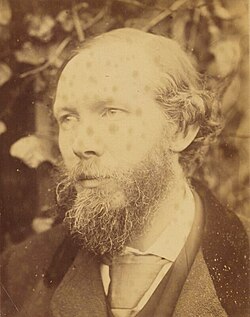 Dr. Arthur Thomas Myers (April 16, 1851 – January 10, 1894) was a Victorian physician, accomplished sportsman, psychical researcher, and member of the
Cambridge Apostles. Operating within the intellectual and homosocial elite of late 19th-century Cambridge, his life connected
early psychological and neurological research with the broader cultural milieu of Victorian aestheticism and same-sex romantic friendships.
Dr. Arthur Thomas Myers (April 16, 1851 – January 10, 1894) was a Victorian physician, accomplished sportsman, psychical researcher, and member of the
Cambridge Apostles. Operating within the intellectual and homosocial elite of late 19th-century Cambridge, his life connected
early psychological and neurological research with the broader cultural milieu of Victorian aestheticism and same-sex romantic friendships.
Born in Keswick, Cumberland, Arthur was the youngest son of the Rev. Frederic Myers and Susan Harriet Marshall (daughter of the industrialist John Marshall). He belonged
to an intellectually distinguished family: Frederic W.H. Myers (eldest brother) was a renowned classicist, poet, and co-founder of the Society for Psychical Research (SPR).
Ernest Myers (elder brother) was a poet and classical scholar.
Arthur was educated at Cheltenham College before entering Trinity College, Cambridge. During his university years, he excelled both academically and athletically.
At Trinity College, Myers was elected to the Cambridge Apostles (the Cambridge Conversazione Society), an elite, secret intellectual society composed predominantly of
members from Trinity and King's Colleges.
During the mid-to-late Victorian era, the Apostles were a central hub for philosophical debate, radical freethought, and intense male romantic attachments. The society
cultivated an ethos that celebrated Greek ideals of friendship and emotional intimacy between men.
While Arthur Thomas Myers did not leave explicit personal memoirs detailing his own sexual identity, his life was deeply intertwined with 19th-century queer networks and
homosocial circles:
His closest intellectual and social companions—including his brother Frederic Myers, philosopher Henry Sidgwick, scholar
Arthur Sidgwick, and researcher Edmund Gurney—were key figures in late-Victorian
homosocial and early homosexual subcultures. His brother Frederic had well-documented youthful homosexual relationships with Arthur Sidgwick and the pioneering queer
advocate John Addington Symonds.
Arthur remained unmarried throughout his life, devoting his personal and professional energies to his medical career, his athletic pursuits, and the close-knit male
network of the Society for Psychical Research.
Arthur studied medicine at Cambridge, earning his M.D. in 1881, and was elected a Fellow of the Royal College of Physicians (F.R.C.P.) in 1893. He practiced at Belgrave
Hospital for Children and St. George's Hospital in London.
In addition to his medical and academic pursuits, Myers was a high-level sportsman:
He played cricket for Cambridge University against the Marylebone Cricket Club (MCC) in 1870.
Competed in the 1878 Wimbledon Singles (reaching the Quarterfinals before losing to eventual champion Frank Hadow) and returned to compete again in 1879.
Arthur Myers's health deteriorated due to epilepsy and Bright's disease. On January 10, 1894, at the age of 42, he died in London from asphyxia following an overdose of
chloral hydrate (a sedative commonly used at the time for insomnia and seizures).
His death is widely considered to have been a suicide or an accidental overdose driven by severe chronic illness. It forms part of a poignant chapter in the history of
Victorian psychical research, occurring alongside the premature deaths of his close associates Edmund Gurney and Frank Podmore.
References:
- British Medical Journal (BMJ): "Arthur Thomas Myers, M.A., M.D. Cantab., F.R.C.P." (Obituary published January 27, 1894).
- Jackson, John Hughlings. "A Particular Variety of Epilepsy ('Intellectual Aura')." Brain (1888/1898).
- Taylor, David C., and Susan M. March. "Hughlings Jackson's Dr Z: the paradigm of temporal lobe epilepsy revealed." Journal of Neurology, Neurosurgery, and Psychiatry 43, no. 9 (1980): 758–767.
- Royal College of Physicians (RCP) Museum / Inspiring Physicians: Biographical entry for Arthur Thomas Myers (M.D. Cantab, F.R.C.P.)
- Deacon, Richard. The Cambridge Apostles: A History of Cambridge University's Elite Secret Society (1985).
- Lubbock, Paul. The Cambridge Conversazione Society Records.
- Proceedings & Journals of the Society for Psychical Research (SPR)
- Gauld, Alan. The Founders of Psychical Research (Routledge & Kegan Paul, 1968).
- Hamilton, Trevor. Immortal Longings: F. W. H. Myers and the Victorian Search for Life After Death (Imprint Academic, 2009).
- Symonds, John Addington. Memoirs of John Addington Symonds (ed. Phyllis Grosskurth).
- Cocks, H.G. Nameless Offences: Homosexual Desire in the 19th Century (I.B. Tauris, 2003).
Support this project
This website is a passion project researched, developed, and funded entirely by me. If you find the content valuable and would like to help support the ongoing research and hosting costs, any contribution is deeply appreciated.
Thank you for keeping this independent resource alive!
My books on Amazon: Elisa Rolle's books
BACK TO HOME PAGE